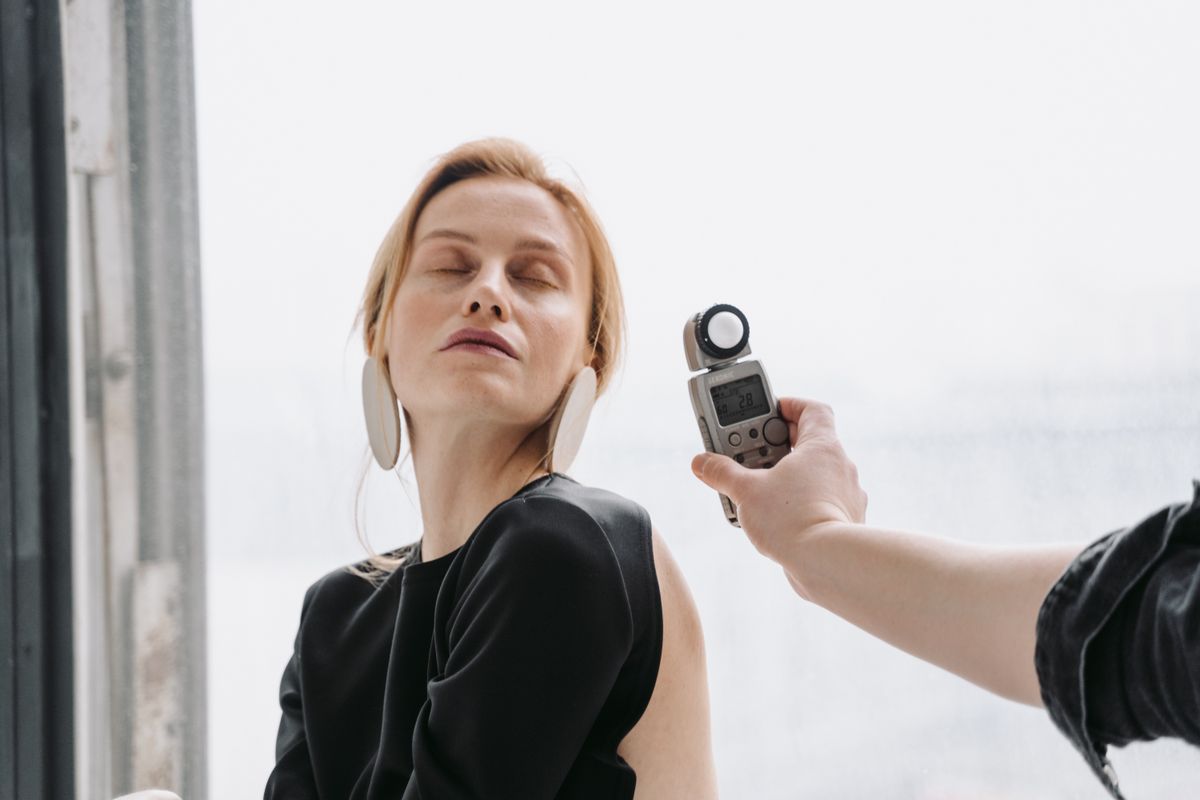
How is light measured? It depends on which property of light you mean, because light is measured in at least six different units. Total output is measured in lumens, the light landing on a surface in lux, and the intensity of a beam in candela. The colour of light is captured by its temperature in kelvin or its wavelength in nanometres, and the raw energy in watts. Here's where we're going: each unit in plain terms, the tools that read them, and real numbers so you can feel the scale.
How is light measured? The quick answer
How is light measured in practice? There are two whole families of light measurement, and knowing which you're in clears up most of the confusion.
- Photometry measures light as the human eye sees it — weighted toward the wavelengths we're sensitive to. Its units are lumens, lux, and candela.
- Radiometry measures the raw physical energy of light, regardless of whether we can see it. Its unit is the watt.
A bulb maker uses photometry (how bright it looks); a solar engineer uses radiometry (how much energy arrives). Both are "measuring light," just answering different questions. Light itself — what it is and the energy it carries — is the subject of our guide to what light energy is.
Lumens, lux, and candela: the three units of brightness
These three photometric units trip people up, but a single picture sorts them out. Imagine watering a garden with a can.
- Lumens (lm) are the total water you pour out — the total visible light a source emits in all directions. An 800-lumen bulb always emits 800 lumens.
- Lux (lx) is how wet one patch of ground gets — the light actually landing on a surface. One lux is one lumen spread over one square metre. Move the can higher and the same water spreads thinner, so the lux drops even though the lumens don't.
- Candela (cd) is the strength of the stream in one direction — the intensity of light in a particular direction. A floodlight spreads its lumens wide (low candela, big area); a spotlight concentrates them into a beam (high candela, narrow).
The candela is actually the SI base unit for light, and lumens and lux are defined from it. (Wikipedia's article on the lumen and the article on lux show how they connect.)
Watts vs lumens: why brightness isn't wattage
Here's the misconception worth fixing, because it costs people money: watts do not measure brightness. For a century we bought bulbs by wattage — a "60-watt bulb" — and came to treat watts as a brightness rating. They never were. A watt measures how much power a bulb draws, not how much light it gives back.
The reason it used to work is that old incandescent bulbs were all about equally (in)efficient, so wattage tracked brightness. LEDs broke that link. A 9-watt LED can match the brightness of a 60-watt incandescent — both put out around 800 lumens — because the LED converts far more of its energy into light instead of heat. So the honest way to compare bulbs is the lumens on the box, not the watts. (For how the bulbs themselves differ, see how a light bulb works.)
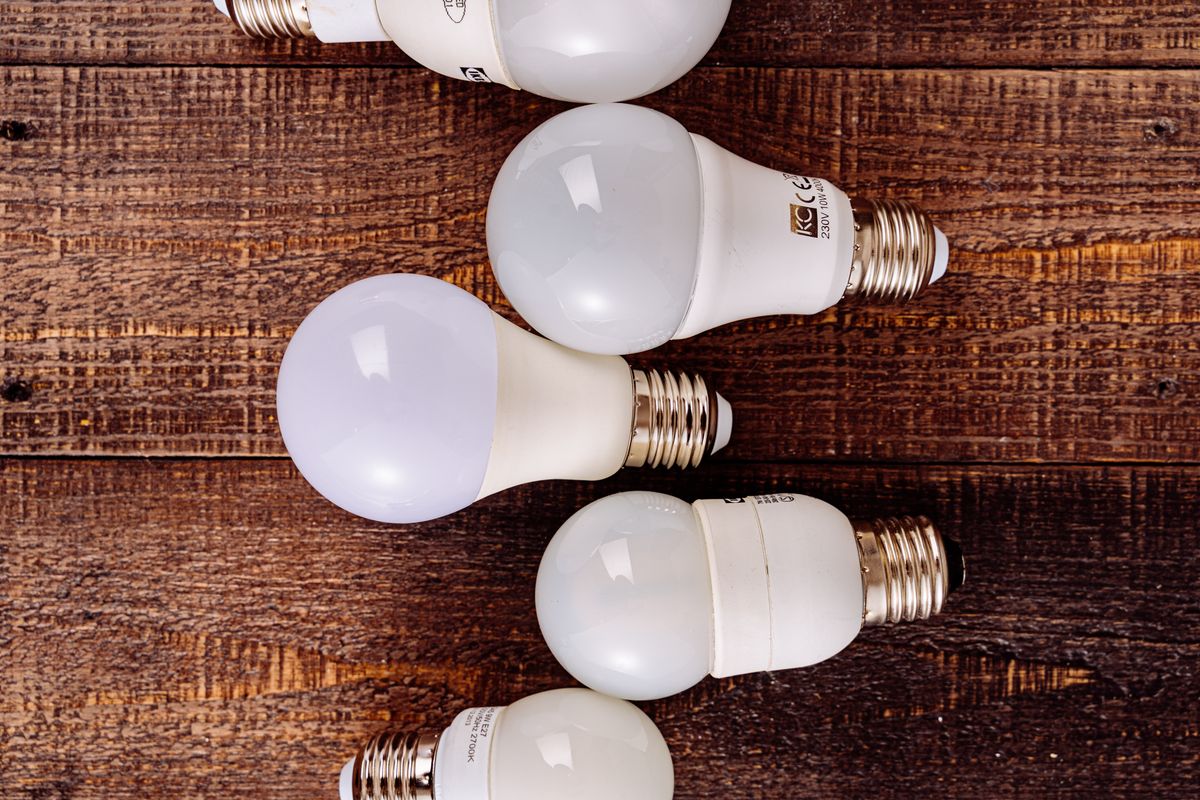
Lumens per watt, written lm/W, is the proper measure of efficiency: incandescents manage about 15 lm/W, while good LEDs reach 100 lm/W or more.
Colour temperature: measuring how warm or cool light is
Brightness isn't light's only measurable quality — colour is too. The everyday measure is colour temperature, in kelvin (K). Think of heating a metal poker: it glows dull red, then orange, then yellow-white, then blue-white as it gets hotter. Colour temperature borrows that scale.
Here's the catch, and it's genuinely backwards: lower kelvin looks warmer, higher kelvin looks cooler. A candle flame sits around 1,800 K and looks cosy orange; a "warm white" bulb is about 2,700 K; midday daylight is roughly 5,500–6,500 K and reads as crisp blue-white. So the "warm" lamp has the lower number. (Wikipedia's colour temperature article explains the heated-object scale behind it.)
Wavelength: measuring the colour of light in nanometres
For exact colour, physicists skip kelvin and measure wavelength directly, in nanometres (nm) — billionths of a metre. Each pure colour is a specific wavelength: violet near 380 nm, green around 550 nm, red out near 700 nm. The whole visible spectrum runs from about 380 to 700 nm, a slice so thin it's roughly 100–200 times narrower than a human hair.
The tool for this is a spectrometer: it spreads light out by wavelength — the same splitting a prism does — and measures how much of each colour is present. It's how we read the make-up of a star's light, check a screen's colour accuracy, or identify a chemical by the wavelengths it absorbs.
How much light is that? Real-world examples
Numbers mean more when you can feel them. Here's the lux scale of everyday life, from blinding to barely-there:
| Setting | Approx. illuminance (lux) |
|---|---|
| Direct midday sunlight | ~100,000 lux |
| Overcast daylight | ~1,000–10,000 lux |
| A well-lit office or classroom | ~300–500 lux |
| A comfortable living room | ~50 lux |
| Full moon on a clear night | ~0.1 lux |
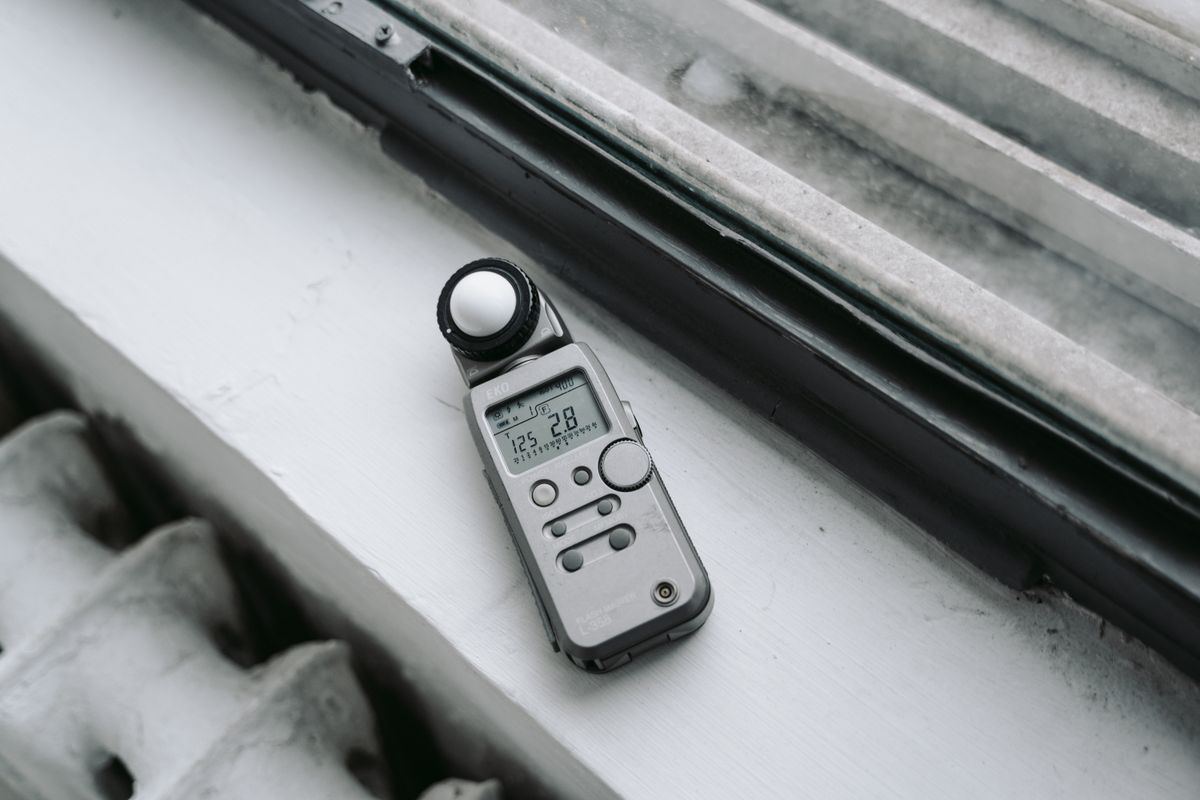
A single candle, meanwhile, shines at roughly 1 candela — which is exactly where that unit's name comes from. And you likely carry a light meter already: most smartphones have a light sensor that a free app can read out in lux. So how is light measured day to day? Usually in lux on a meter, and in lumens on the box your bulb came in.
One original diagram for this article: a single bulb at the centre with three labelled arrows — total glow in every direction marked "lumens," one ray to a small patch of floor marked "lux (lumens per m²)," and a narrow forward beam marked "candela (intensity in a direction)" — plus a side scale showing colour temperature from a 1,800 K candle to 6,500 K daylight. One picture that separates how much, how concentrated, and what colour.
Want the physics behind the light you're measuring? Start with our light energy guide, see the full types of light, or browse all our optics guides.
Frequently Asked Questions
How is light measured?
Light is measured in several ways depending on what you want to know. Total light output is measured in lumens, the brightness landing on a surface in lux, and the intensity of a beam in candela. The colour of light is measured by its temperature in kelvin or its wavelength in nanometres, while the raw energy is measured in watts. A light meter or lux meter reads brightness; a spectrometer reads wavelength.
What unit is light measured in?
There isn't one single unit, because 'light' has several properties. The lumen (lm) measures total visible output, the lux (lx) measures light per square metre on a surface, and the candela (cd) measures intensity in one direction. The candela is the SI base unit for light; the others are built from it.
What is the difference between lumens and lux?
Lumens measure the total amount of light a source gives out in every direction. Lux measures how much of that light actually lands on a given surface — one lux is one lumen spread over one square metre. The same bulb gives the same lumens, but the lux drops as you move further away, because the light spreads thinner.
Do watts measure brightness?
No. Watts measure how much power a bulb uses, not how much light it produces. A 9-watt LED can be as bright as a 60-watt incandescent because it turns far more of its energy into light. To compare brightness, look at the lumens printed on the box, not the wattage.
What is colour temperature measured in?
Colour temperature is measured in kelvin (K). Confusingly, lower numbers look warmer and higher numbers look cooler: a candle is about 1,800 K (orange), a warm-white bulb around 2,700 K, and midday daylight roughly 5,500 to 6,500 K (bluish-white). The scale comes from the colour a piece of metal glows as it is heated.
What tools are used to measure light?
A light meter or lux meter measures brightness in lux and is used by photographers and lighting designers. A spectrometer splits light to measure its wavelengths and colour. Many smartphones include a light sensor that a free app can turn into a rough lux meter for everyday use.

About Umar Farooq
Umar Farooq writes in-depth guides on the physics of light and optics — from reflection, refraction, and lenses to diffraction, lasers, and fiber optics, explained from first principles.
Read more about Umar Farooq →