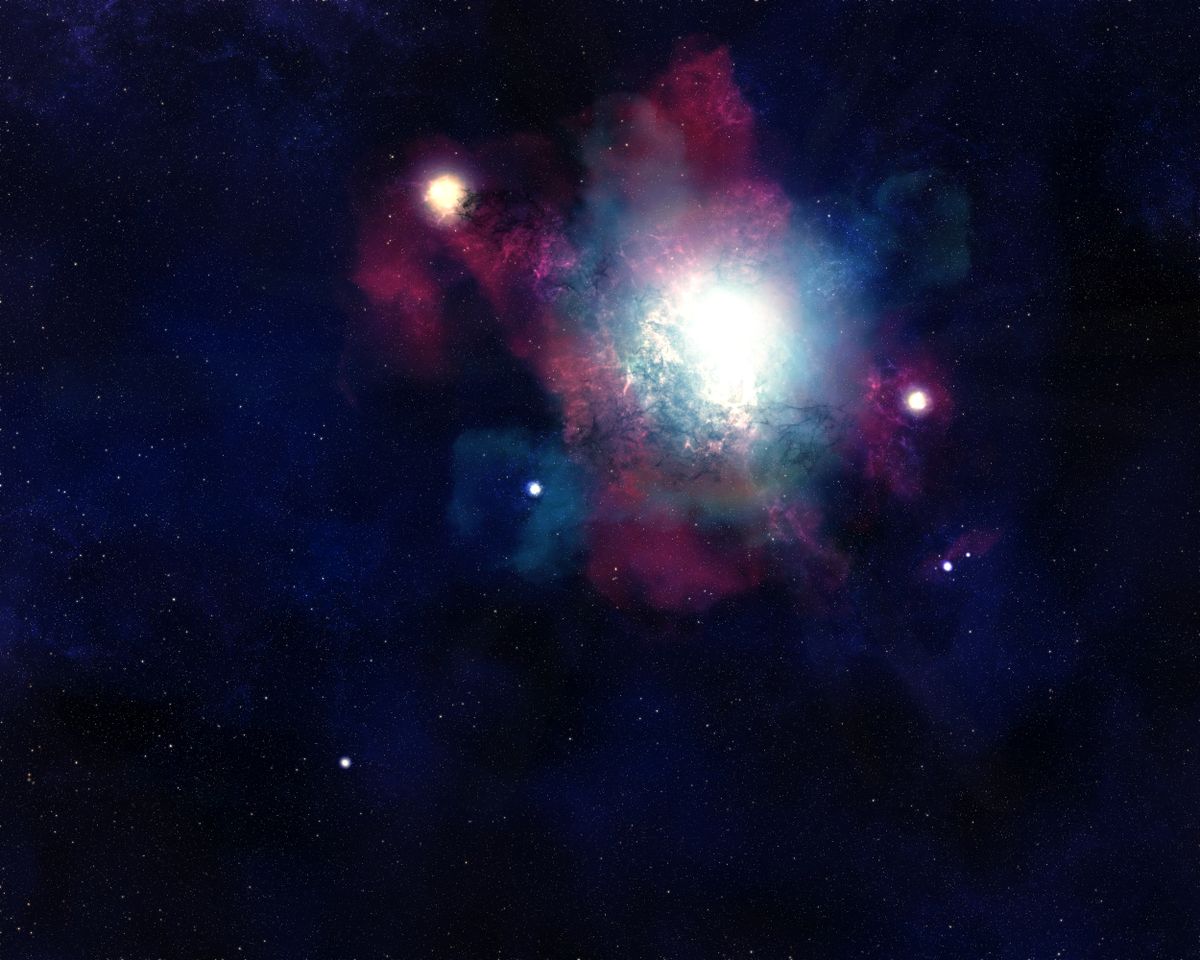
How was light made? The first light was forged in the Big Bang, when the entire universe was a searing-hot ball of energy about 13.8 billion years ago. Photons — particles of light — existed almost from the very start, but for nearly 400,000 years they were trapped, unable to travel. Only when the universe cooled and the first atoms formed did light finally stream free across all of space. Here's the origin of light in three acts: born in fire, set free, and then remade, over and over, by the stars.
How was light made? The quick answer
Light has three origin stories, stacked in time:
- Born in the Big Bang. The young universe was so hot and dense that it was full of energy and radiation. Photons were there from the first moments — but bottled up.
- Set free at recombination. About 380,000 years after the Big Bang, the universe cooled enough for atoms to form, and the trapped light was released everywhere at once. We still detect it today.
- Remade by stars. Hundreds of millions of years later, the first stars switched on and began making fresh light by nuclear fusion — the process still lighting our sky.
So how was light made? Not in a single instant, but in those three stages spread across billions of years. Light itself — what it actually is — is the subject of our guide to what light energy is. Here we're asking where it came from.
The Big Bang: light born in fire
Start at the beginning, about 13.8 billion years ago. The universe burst into expansion from a state that was unimaginably hot and dense, and almost instantly it was a roiling soup of subatomic particles — protons, neutrons, electrons — bathed in intense radiation. Light, in the form of photons, was part of that fireball from the earliest moments.
Here's a misconception worth fixing right away: the Big Bang was not an explosion that flung matter and light outward through empty space from a central point. There was no centre and no edge. It was an expansion of space itself, happening everywhere at once. That's why the first light, when it was finally freed, appeared across the entire sky rather than streaming out from one spot — a clue we'll come back to. (NASA's overview of the early universe traces these first epochs.)
Why was the early universe dark if light already existed?
Here's the strange part. For its first few hundred thousand years, the universe was full of light and yet utterly dark — because that light couldn't go anywhere.
Think of headlights in thick fog. The light is there, but it scatters off the droplets so much that the beam never reaches you. The early universe was a fog of free electrons, and photons bounced off them constantly, unable to travel more than a tiny distance before being knocked off course. The cosmos was an opaque, glowing plasma: bright everywhere, transparent nowhere. For light to be made in a useful sense — free to cross space — something had to clear the fog.
Recombination: the first light breaks free
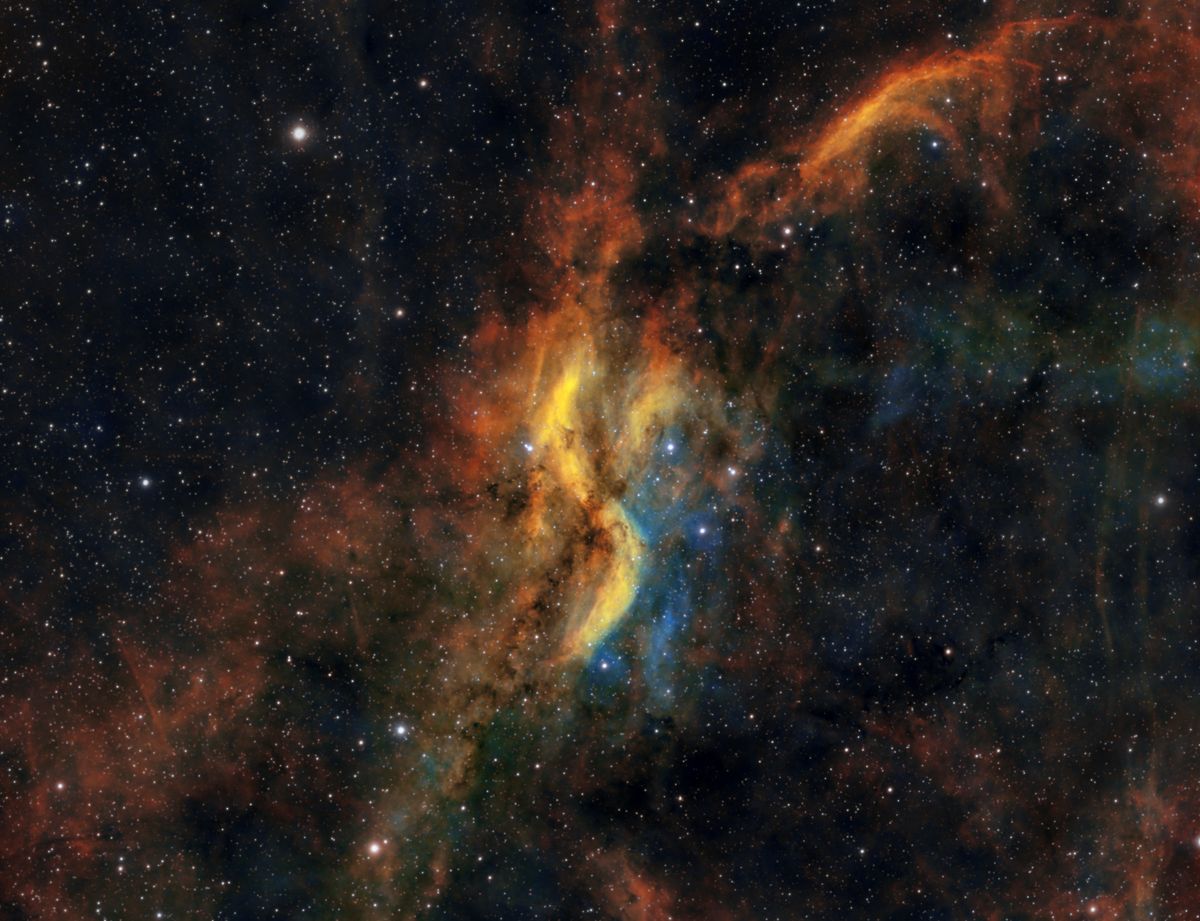
About 380,000 years after the Big Bang, the universe had expanded and cooled to around 3,000 kelvin. That was cool enough for electrons to finally stick to nuclei and form the first neutral atoms — mostly hydrogen and helium. Physicists call this moment recombination, and it changed everything.
With the free electrons mopped up, the fog lifted. Photons that had been ricocheting for millennia suddenly had clear space to fly through, and they set off in straight lines across the cosmos. That release is the first light we can still observe — the cosmic microwave background, or CMB.
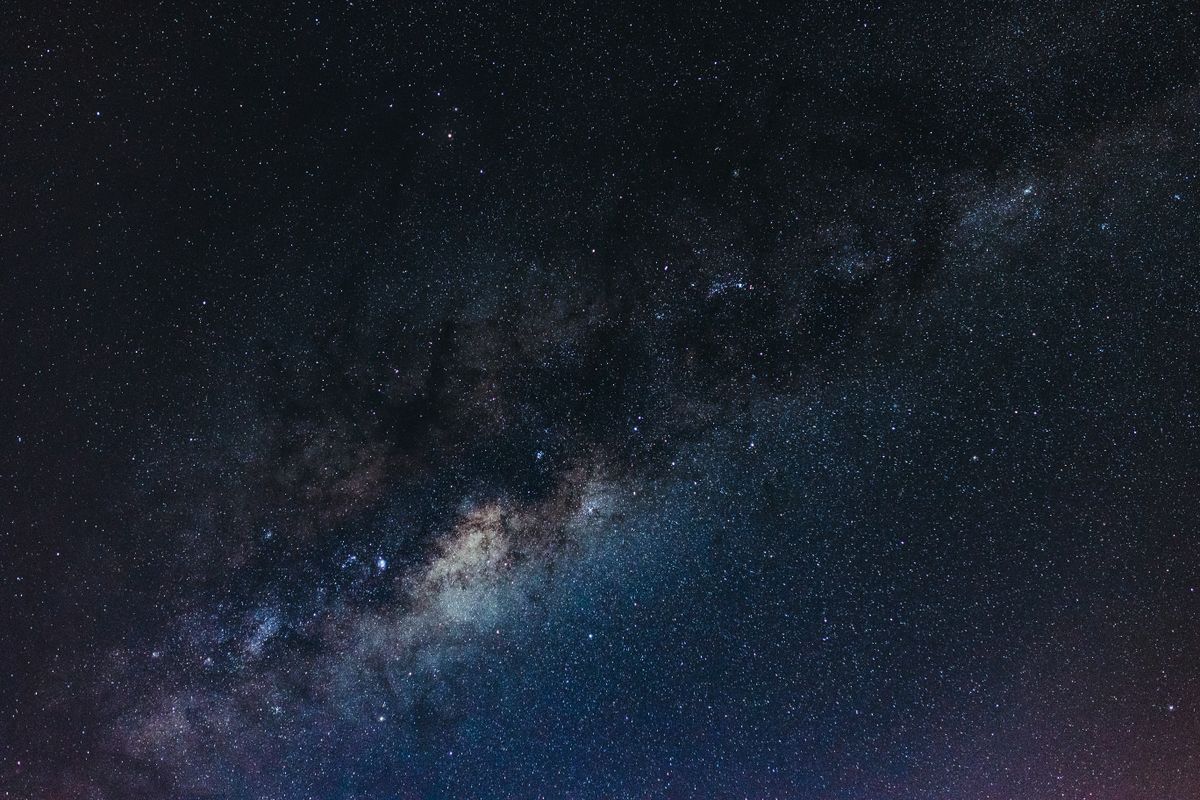
The CMB started as a hot glow, but over 13.8 billion years the expansion of space has stretched its waves like a drawn-out rubber band, dropping it from visible light all the way down to faint microwaves — one of the types of light our eyes can't see. It now sits at just 2.7 kelvin, barely above absolute zero, and it arrives from every direction at once. (The cosmic microwave background is the most direct evidence we have of the early universe.)
It was found by accident. In 1965, Arno Penzias and Robert Wilson at Bell Labs kept picking up a microwave hiss from all over the sky that they couldn't explain — they even scrubbed pigeon droppings from their antenna. The hiss was the afterglow of recombination, and the discovery won them the 1978 Nobel Prize.
The cosmic dark ages and the first stars
After recombination came a quiet stretch with a fitting name: the cosmic dark ages. The CMB had flown off, but there were no stars yet — just cooling clouds of neutral hydrogen and helium drifting in the dark. For perhaps 100 to 200 million years, the universe made no new light at all.
Then gravity did its slow work. Those gas clouds collapsed under their own weight, growing hot and dense at the centre until nuclear fusion ignited — and the first stars switched on. Fusion squeezes hydrogen nuclei into helium and releases a flood of energy, some of it as light. These first stars were light factories, and they ended the dark ages, flooding space with fresh starlight for the first time.
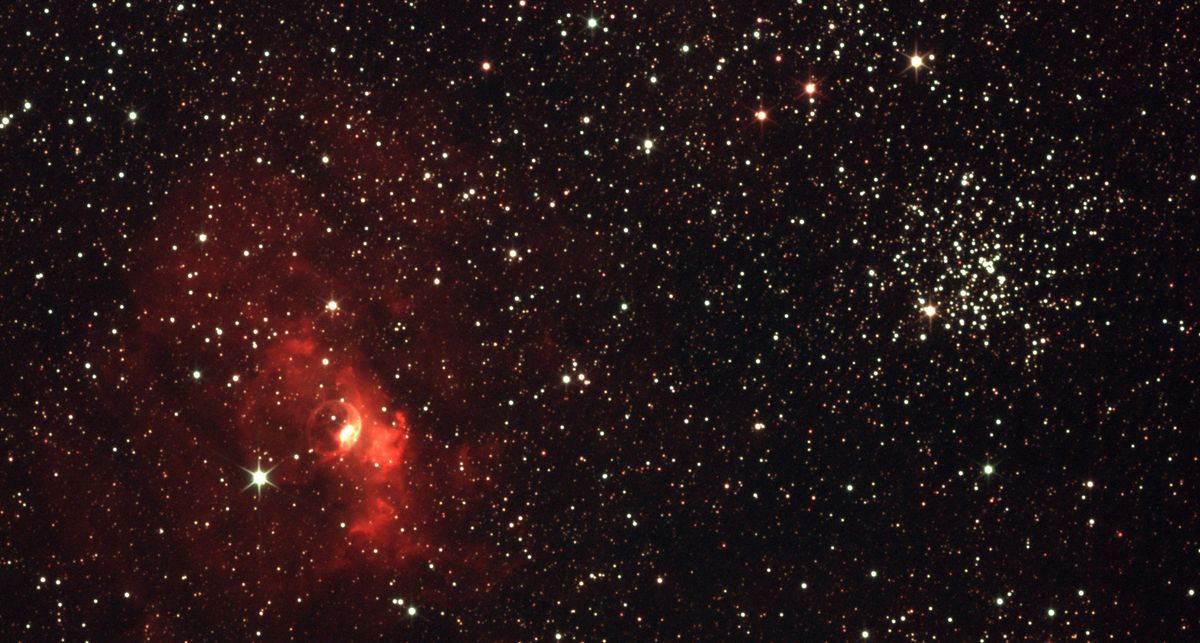
That is the third and ongoing origin of light: not a one-off event, but a process still running in every star, including ours. Ask how was light made, and the full answer reaches from the Big Bang right up to the starlight arriving tonight.
Where light comes from today
Nearly all the light you meet today traces back to a star. The Sun makes light the same way those first stars did — fusing hydrogen into helium in its core and releasing the energy, which takes about 8 minutes 20 seconds to reach us as sunlight. Starlight at night is the same process happening light-years away.
Even "man-made" light borrows from this chain. A fire releases chemical energy from fuel that plants built using sunlight; a bulb runs on electricity often generated from the Sun, wind, or ancient stored sunlight in fossil fuels. Trace any beam back far enough and you arrive at fusion in a star — or, further still, at the fire of the Big Bang itself.
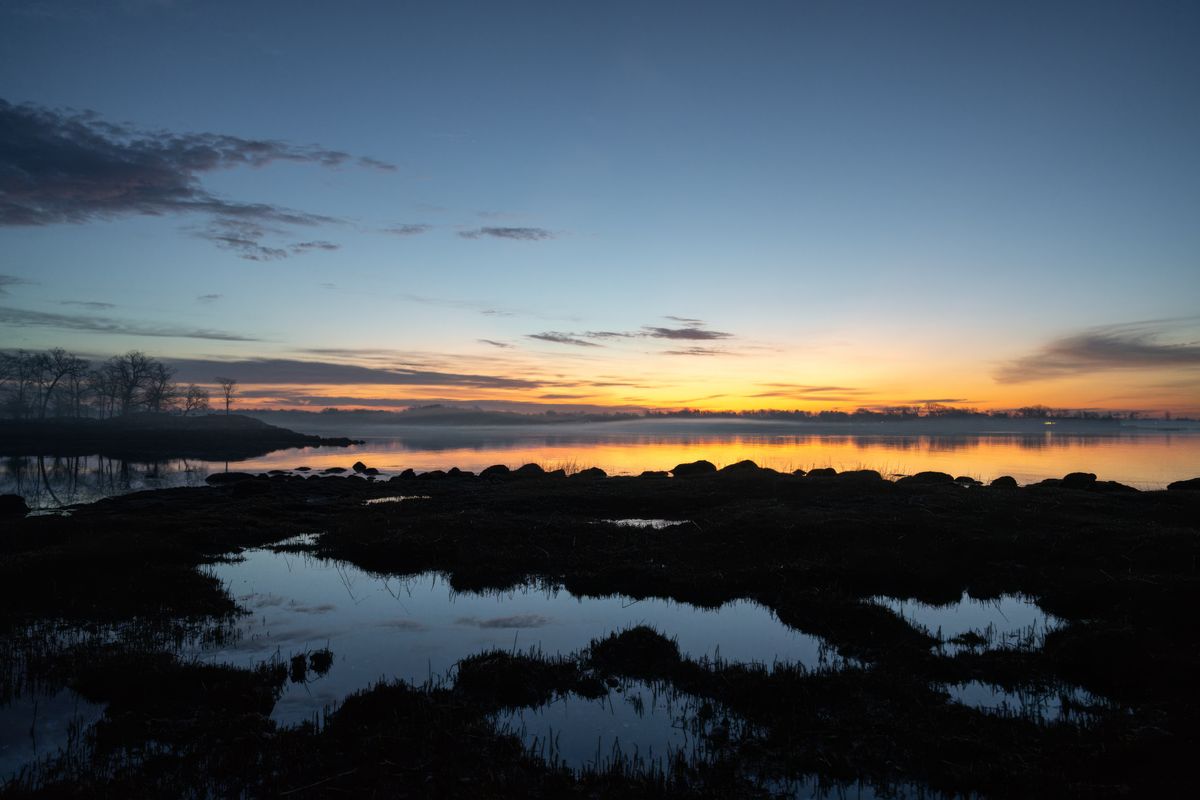
One original diagram for this article: a cosmic timeline ribbon running left to right — the Big Bang fireball (light trapped), the opaque plasma "fog" era, the flash of recombination at 380,000 years (light set free, labelled "the CMB"), the dark ages, and the first stars switching on — with the wavelength of that first light stretching from a hot glow to cold microwaves as the ribbon widens with the expanding universe.
Want to keep going from origins to everyday optics? Start with our light energy guide, see the full range of types of light, or browse all our optics guides.
Frequently Asked Questions
How was light made in the universe?
Light was first made in the Big Bang, when the universe was a tiny, blazing-hot ball of energy and particles. Photons existed from the start but were trapped in a dense plasma. About 380,000 years later, the universe cooled enough for atoms to form, and that first light streamed free across all of space at once. Ever since, stars have made new light through nuclear fusion.
What was the first light in the universe?
The first light we can still detect is the cosmic microwave background (CMB) — the afterglow released about 380,000 years after the Big Bang, when the universe became transparent. Once a hot glow, it has been stretched by the expansion of space into faint microwaves that fill the sky in every direction.
Why was the early universe dark if light already existed?
Because the universe was an opaque plasma of free electrons and nuclei. Photons could not travel far before bouncing off a free electron, like headlights lost in thick fog. Only when electrons joined nuclei to form neutral atoms — an event called recombination — did the fog clear and light finally travel freely.
What causes light to be made today?
Almost all the light around us today is made by stars, including the Sun. Deep in a star's core, nuclear fusion squeezes hydrogen into helium and releases energy, some of which leaves as light. Other sources — fire, bulbs, screens — ultimately trace their energy back to the Sun or to the same nuclear and chemical processes.
How old is the oldest light we can see?
The cosmic microwave background is about 13.8 billion years old — released roughly 380,000 years after the Big Bang. Light from the most distant galaxies is younger but still ancient, having travelled for billions of years. Looking far out into space is always looking far back in time.
Did the Big Bang make a flash of visible light?
Not a flash anyone could have seen, and not from one spot. The early universe glowed everywhere at once, but that light was trapped in plasma. When it was finally released at recombination, it filled all of space uniformly. There was no central explosion and no outward-racing flash — the glow was everywhere.

About Umar Farooq
Umar Farooq writes in-depth guides on the physics of light and optics — from reflection, refraction, and lenses to diffraction, lasers, and fiber optics, explained from first principles.
Read more about Umar Farooq →